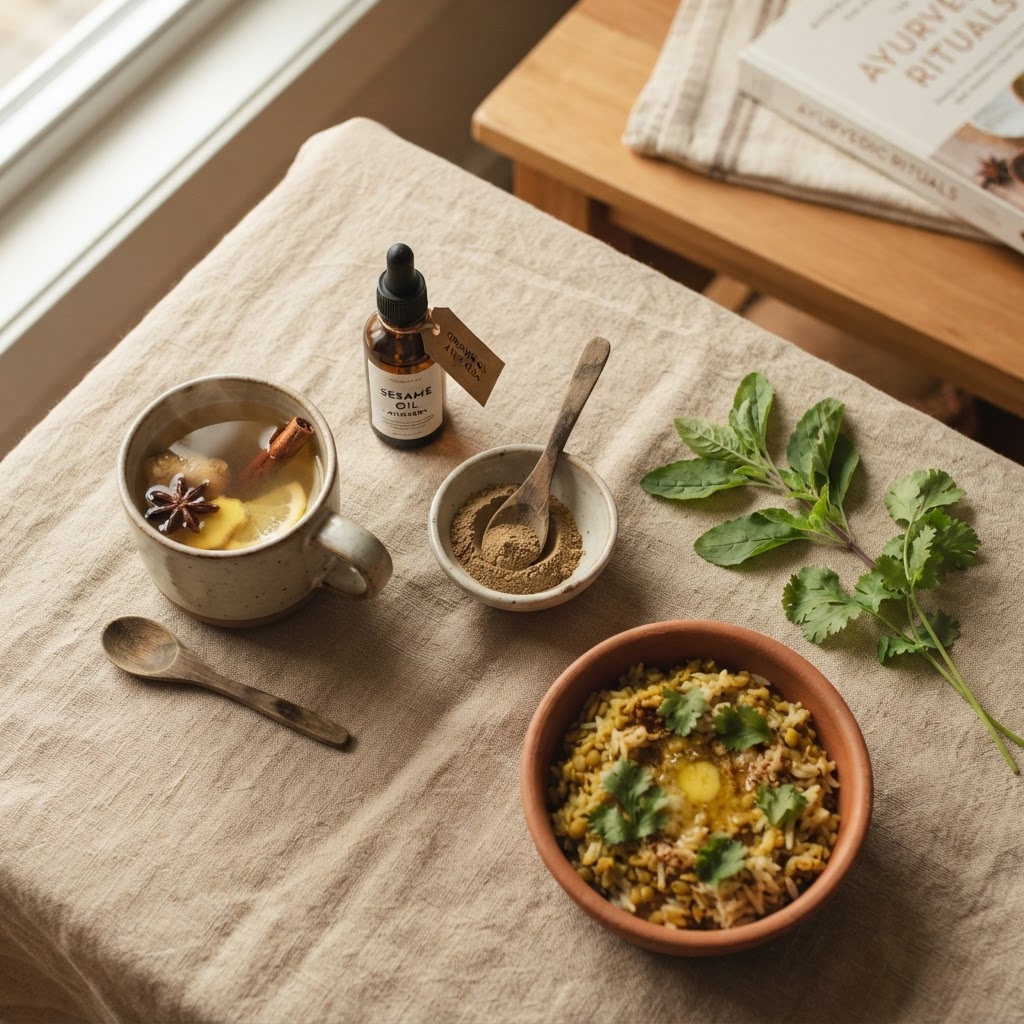
The Art of Coming Home: An Ayurvedic Reset for the Well-Travelled
There is a particular kind of tiredness that follows travel: not quite jet lag, not quite exhaustion, but a scattered, papery feeling, as though some part of you is still somewhere over the Atlantic. In Ayurveda, this is Vata: the dosha of air and ether, the very elements that govern movement, change, and flight. Airplanes, irregular meals, unfamiliar beds and shifting time zones all aggravate it beautifully. The remedy is not more stimulation, but its opposite - warmth, rhythm, and stillness, gently reapplied.
Here is a short, considered ritual for the days after you land.
Rekindle Your Digestion First
Travel dampens agni, the digestive fire, more than almost anything else. Before reaching for a green juice or a raw salad, give your system something it can actually work with.
- Sip warm water or fresh ginger tea throughout the day rather than iced drinks.
- Favour soft, cooked foods - kitchari, vegetable soups, well-simmered grains - over anything cold or raw for the first few days.
- Season generously with cumin, coriander, fennel and turmeric, all classic digestive allies.
- Take your largest meal at midday, when digestive fire is naturally strongest, and let dinner be light and early.
- Consider a course of Triphala in the evening. This trio of fruits - amalaki, bibhitaki and haritaki - is one of Ayurveda's most enduring formulas for gently regulating digestion and elimination after disruption. A small cup of warm water with a half-teaspoon before bed is often enough to feel the difference within a few days.
Return to Rhythm
Vata thrives on routine, and travel is its natural enemy. The nervous system settles fastest when the day regains a predictable shape.
- Go to bed and rise at the same time, even if your body is still arguing about which time zone it's in.
- Step outside for morning light as early as you can - it does more to reset a disrupted circadian rhythm than caffeine ever will.
- Choose gentle movement over ambition. A slow walk or restorative yoga will do far more good than a punishing workout in these first days home.
Warmth, Applied Directly
If there is one ritual worth protecting above all others, it is abhyanga - a warm oil self-massage, done before bathing.
Use a good, unrefined sesame oil in cooler months, or a lighter almond or sweet coconut oil if you've returned somewhere warm. Warm a small amount between your palms and work it into the skin in slow, long strokes along the limbs and circular motions at the joints, before stepping into a warm bath or shower. It takes ten unhurried minutes and does more to ground a fatigued, wind-blown nervous system than almost anything else in the Ayurvedic toolkit. Look for a small-batch, cold-pressed oil with nothing added - the simplicity is the point.
A quieter companion practice is nasya: a few drops of medicated or plain sesame oil applied to each nostril each morning. The nasal passages are considered a direct gateway to the mind in Ayurveda, and this small act helps clear the mental fog and dryness that recycled cabin air leaves behind.
A Note on Herbs
Beyond Triphala, two others are worth keeping close at hand during a travel reset:
- Ashwagandha, taken in the evening, to steady a nervous system still running on adrenaline and unfamiliar time zones.
- Tulsi (holy basil), brewed as a simple tea through the day, to clear the mind and gently support the lungs after hours of pressurised, recirculated air.
None of this needs to be elaborate. The instinct after travel is often to do more - more detoxing, more juicing, more correcting. Ayurveda suggests the opposite: do less, but do it warmly, slowly, and at the same time each day.